Price Channel Scanner Guide: Find Rising, Falling and Horizontal Channels

Many traders understand support and resistance. Fewer traders systematically scan for price channels, even though channels can provide some of the clearest swing trading structures in the market.
A price channel scanner helps you find charts where price is moving between two relatively clean boundaries: a lower support line and an upper resistance line. These structures can be useful for bounce trades, pullback entries, and breakout watchlists.
For newer traders, a channel is simply a moving range. For more advanced traders, it is a structured price corridor that can reveal trend continuation, range behavior, or compression before a breakout.
What Is a Price Channel?
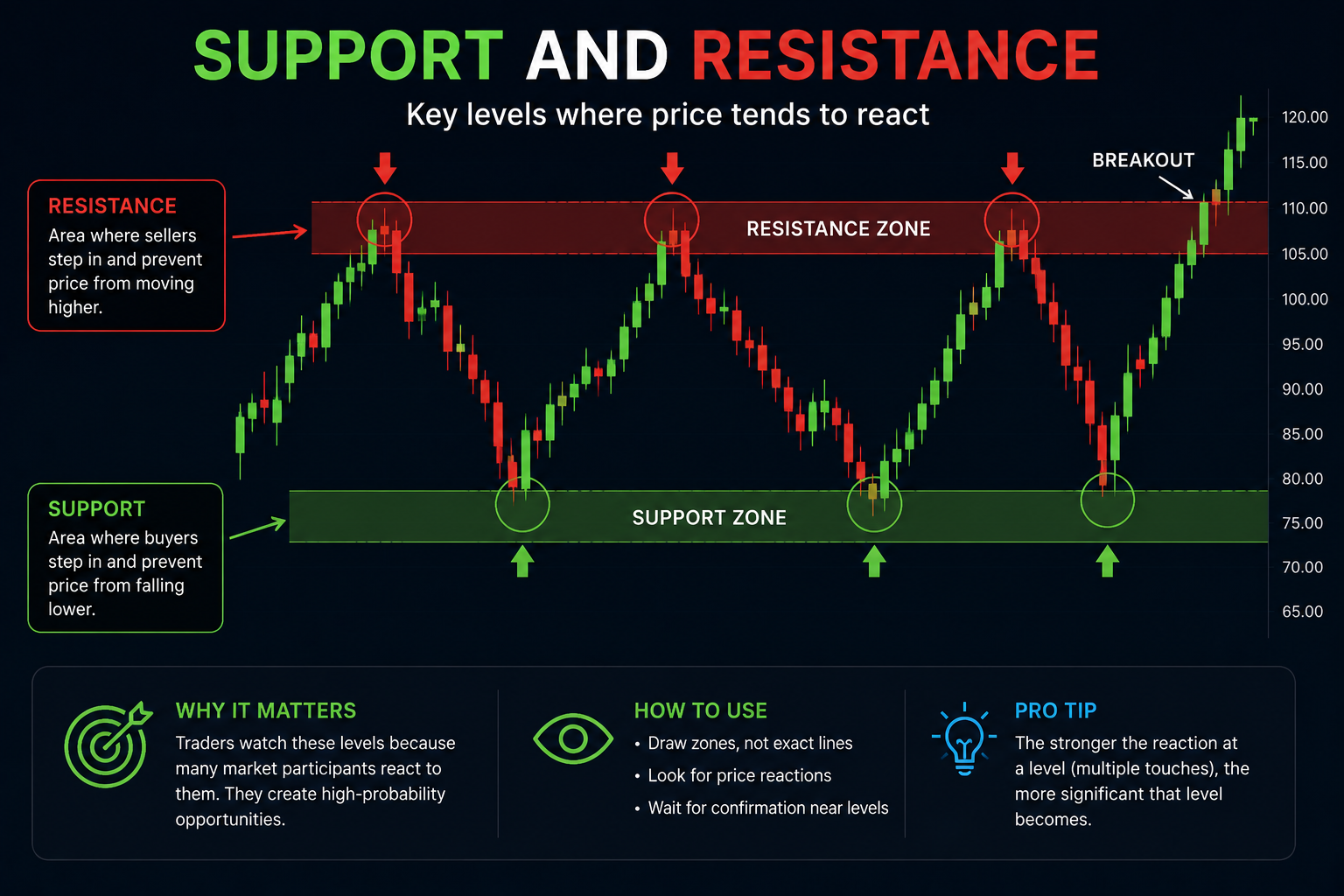
A price channel is formed when price respects two lines over time: one below price acting as support and one above price acting as resistance. The two lines are usually roughly parallel.
- A rising channel slopes upward.
- A falling channel slopes downward.
- A horizontal channel behaves like a range.
In all three cases, the trader wants to know whether the structure is still valid right now, not whether it existed six months ago.
Why a Channel Scanner Matters
Manual channel analysis works on a few charts.
It does not scale well across hundreds or thousands of stocks.
That is where LookForChannel becomes useful:
it turns a visual chart pattern into a repeatable scan.
Instead of manually searching for a rising channel near support, for example, you can ask the scanner to find only stocks where the structure exists and price is still close to one side of the channel.
The Channel Functions Available
The channel scanner family includes:
LookForChannel(timeframe, lookback, minTouches, maxAge, tolerancePercent, maxWidthPercent)LookForRisingChannel(...)LookForFallingChannel(...)LookForHorizontalChannel(...)
This makes the tool flexible. You can either scan for any valid channel, or be more selective and target only the type that fits your trading plan.
How the Scanner Thinks About Channel Quality
A decent channel scanner should do more than connect random highs and lows. It should prefer structures that are:
- Built from recent pivots
- Confirmed by multiple touches
- Still valid and not clearly broken
- Reasonably parallel
- Not too wide relative to current price
- Still close enough to price to be tradeable
That is what makes a channel scan more practical than a generic “pattern detector.” It is looking for structure that can still lead to action.
Beginner Use Case: Buying Pullbacks in Rising Channels
One of the easiest ways to use a rising channel scanner is to look for healthy trends that are currently near channel support. In plain English, you are searching for stocks that are trending up, but not randomly. They are moving higher inside a visible corridor.
This can be especially useful for swing traders who like buying dips inside an established trend rather than chasing vertical moves.
Intermediate Use Case: Trading Horizontal Ranges
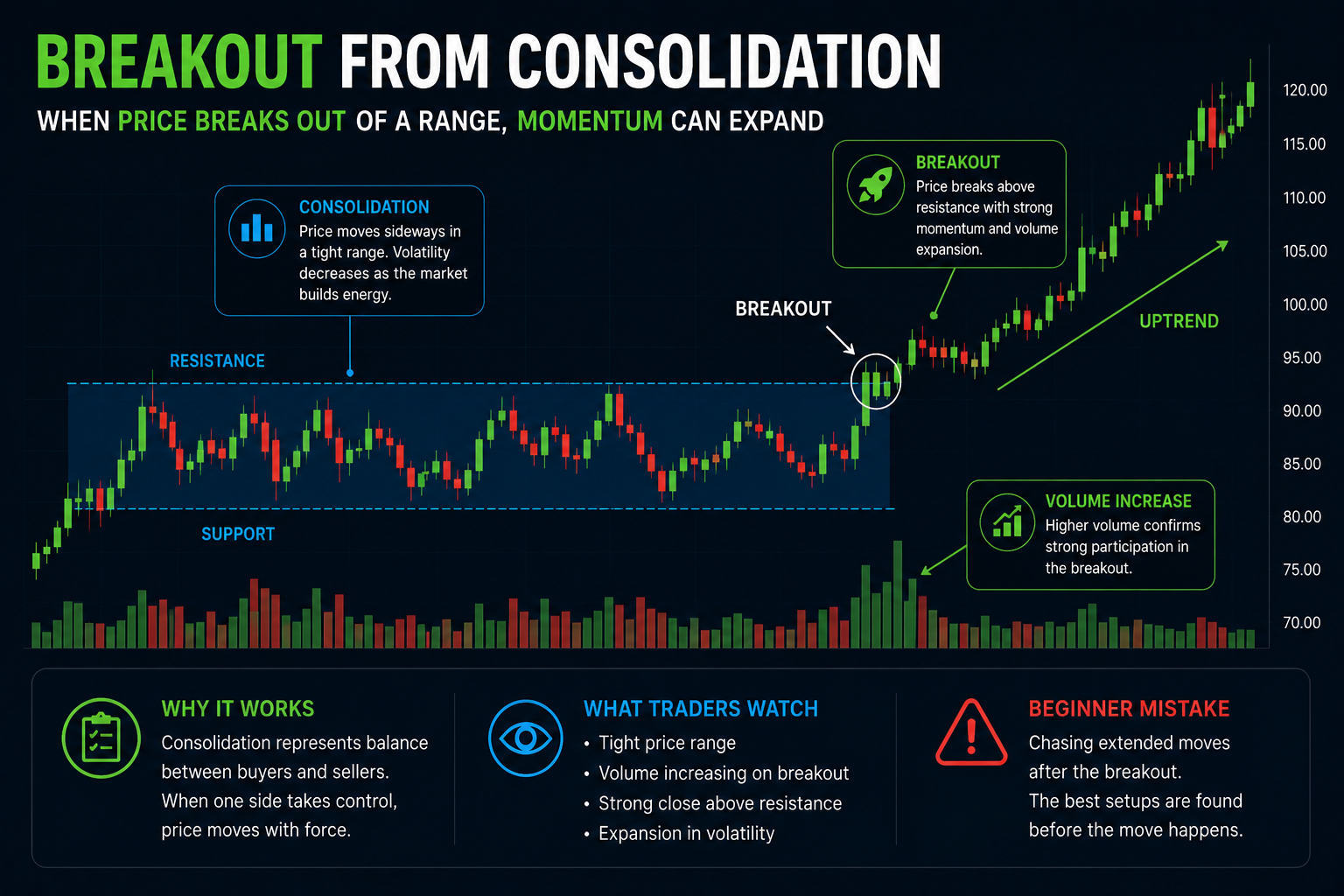
A horizontal channel scanner can help you find range-bound stocks where price keeps moving between the same support and resistance levels. Some traders like buying near the lower boundary and selling near the upper boundary. Others use these ranges as pre-breakout watchlists.
Advanced Use Case: Falling Channels and Reversal Preparation
A falling channel scanner can be useful in two different ways. Trend-following traders may use it to stay aligned with weakness. Reversal traders may use it to monitor stocks that are compressing lower and could eventually break upward with force.
How to Read the Main Parameters
- timeframe: daily is usually best to start, weekly works well for broader structures.
- lookback: controls how far back the scanner searches for channel geometry.
- minTouches: raises the quality bar by requiring more confirmation.
- maxAge: keeps the structure fresh.
- tolerancePercent: determines how strictly price must respect the lines.
- maxWidthPercent: prevents channels from becoming too loose and meaningless.
General Channel Scanner Example
// @StrategyName: Any Tradable Channel
// @StrategyDescription: Finds fresh channels near the current price.

IsNotPriceLocked(20, "d") == 1
QuoteAge("d") < 5
AvgCounterValue(20, "d") > 500000
LookForChannel("d", 120, 3, 20, 1.5, 18) > 65

AddSignal("Any Valid Channel")
Rising Channel Example
// @StrategyName: Rising Channel Pullback
// @StrategyDescription: Finds uptrending stocks near rising channel support.

IsNotPriceLocked(20, "d") == 1
AvgCounterValue(20, "d") > 750000
IsUpTrend(30, "d")
LookForRisingChannel("d", 120, 3, 20, 1.5, 18) > 70
RSI(14, "d") < 62

AddSignal("Rising Channel Support")
Horizontal Channel Example
// @StrategyName: Range Structure Watchlist
// @StrategyDescription: Finds clean horizontal channels for bounce or breakout monitoring.

IsNotPriceLocked(20, "d") == 1
AvgCounterValue(20, "d") > 500000
LookForHorizontalChannel("d", 90, 3, 15, 1.2, 12) > 68
ATRPerc(14, "d") > 1.0

AddSignal("Horizontal Channel")
What to Do After the Scan
- Sort the results by
ChannelQuality. - Review the top charts and confirm the structure visually.
- Check whether price is near support, near resistance, or in the middle.
- Use volume and momentum filters to separate better setups from weaker ones.
- Plan the trade around the channel boundary, not in the middle of the range.
Why These Functions Are Useful
The real advantage of channel scanning is not that it “predicts” the market. Its value is that it identifies repeatable structure quickly and objectively enough to build a high-quality watchlist.
This is especially useful for traders who want more than simple moving average scans. Channel-based scans add geometry, context, and better location awareness to the decision process.
Final Thoughts
The LookForChannel family is useful because it lets you search for chart structure in a much more practical way. You are not just asking whether a stock is up or down. You are asking whether price is moving in a recognizable corridor that can guide a trade idea.
That makes channel scanners helpful for beginners learning structure and for more advanced traders looking to build better support, resistance, and breakout workflows.